India, the US, and the Pax Silica Shift: Why Washington Now Needs New Delhi at the Core
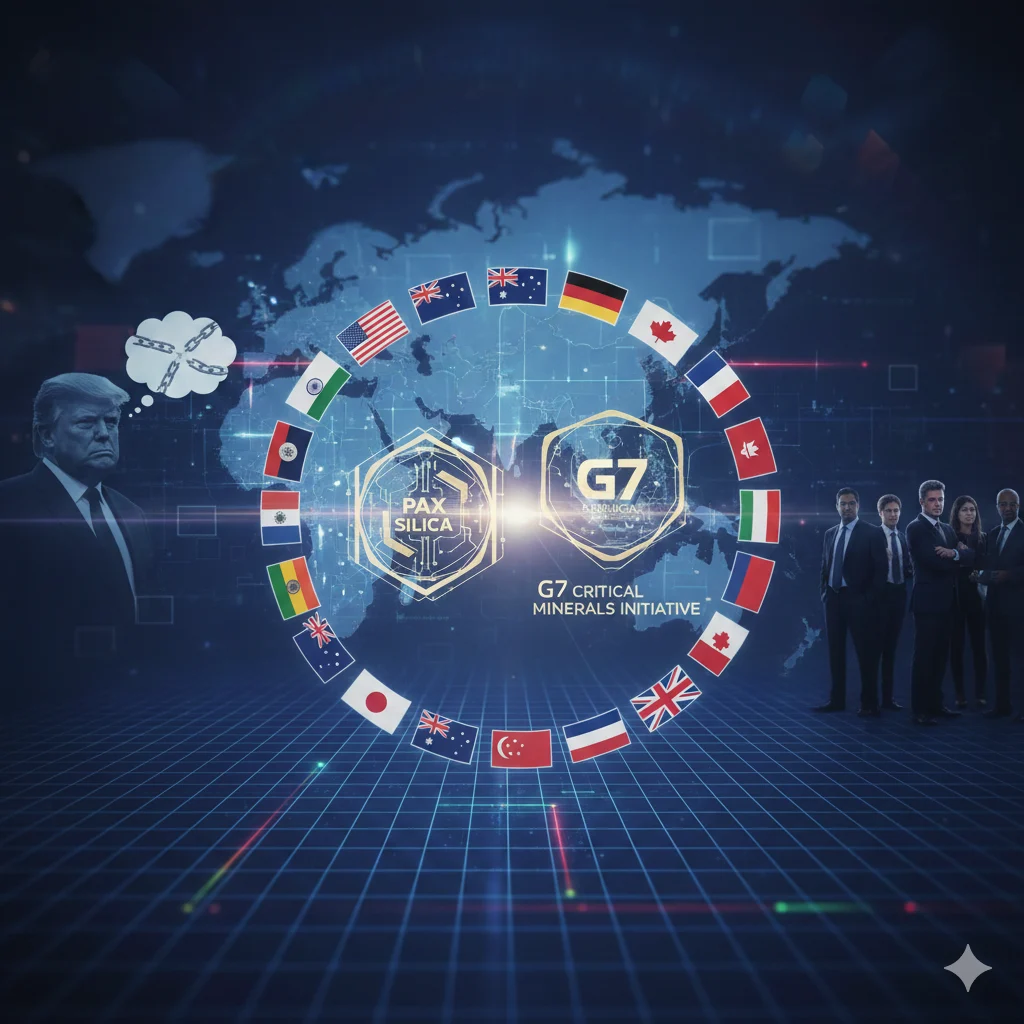
A few weeks ago, the exclusion of India from the newly announced US-led Pax Silica alliance triggered intense debate across global strategic circles. Many linked this move to Donald Trump’s recent statements on India,
but Washington’s long-term calculus tells a different story. With the US now preparing to invite India into both the Pax Silica framework and the G7 Critical Minerals Initiative, the geopolitical realignment is becoming clearer: the emerging global tech and supply-chain architecture cannot function without India at its center.
US Reverses Course on PAX Silica: Why India Is Now Central to Washington’s Tech Strategy
For weeks, the PAX Silica tech alliance sparked loud debates across strategic circles. The United States had launched a new technology framework with countries like Australia, Japan, South Korea, Singapore, and several Western partners. But the most surprising part was India’s absence. Commentators rushed to claim that President Donald Trump was furious with New Delhi and was deliberately keeping India out.
Yet underneath the noise, the geopolitical reality never changed. Washington simply cannot build a next-generation supply chain or a secure tech ecosystem without India. And as expected, within days the US signalled a correction: India would indeed be invited into both the PAX Silica initiative and the G7 Critical Minerals Partnership.
The message from Washington’s newly-appointed ambassador to India was explicit “No partner is more essential than India.” That single statement reflects a shift in the strategic wiring of the Indo-Pacific.
Also Read: Germany’s Visa-Free Transit Shift and India’s New Power Role
India’s Temporary Exclusion: More Optics Than Strategy
Your original script captures an important nuance. Trump may personally dislike India’s independent tone, and his ego may still be bruised from previous diplomatic exchanges. He can skip meetings, delay visits, or throw verbal jabs but he cannot alter the structural priorities of American foreign policy.
Where the US as a nation stands is unambiguous. Every major American policy document, from technology security to supply-chain resilience, identifies India as indispensable. Even if the US President carries personal bias, the institutional machinery does not. That is why the strategy never changed: India would always enter the PAX Silica framework.
The initial omission was political theatre. The correction is geopolitical logic.
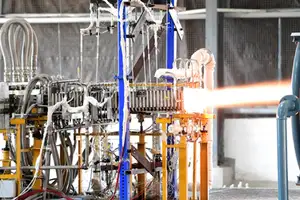
Also Read: DRDO Scramjet Breakthrough: India's 12-Minute Hypersonic Test
PAX Silica and the Critical Minerals Alliance: Similar Names, Different Purposes
Two major initiatives are being discussed, and both matter. But they serve different functions. Many viewers mix them up, so let’s separate them clearly.
PAX Silica is a US-led technological bloc.
The G7 Critical Minerals Alliance is a G7-led supply-chain framework.
India is being brought into both.
G7 Critical Minerals Alliance
The aim is to reduce dependence on China for lithium, cobalt, rare-earths, and other critical inputs needed to build phones, EVs, batteries, defence electronics, AI chips, and power systems. Some countries have been hyping Pakistan’s mineral potential, but the G7 states clearly know where commercial reliability lies and it is not in unstable regions. India, with under-explored reserves and a proven regulatory framework, is seen as a far better long-term partner.PAX Silica
This is the new pillar of America’s tech cooperation framework. It deals with semiconductors, AI systems, secure hardware, and emerging computing technologies. The US intends to share advanced capabilities only with trusted partners Japan, South Korea, Israel, Australia, Singapore, the Netherlands, and others.
India’s inclusion means the United States expects India to be part of future electronics, chip design, and next-generation product ecosystems.
The fact that Washington will place India inside both pillars confirms that India is no longer optional it is structurally necessary.
A Shift that Washington Cannot Avoid: India’s Centrality to Global Manufacturing
One line from your script is crucial:
“These alliances simply cannot function without India. It is impossible.”
This is exactly right. The global manufacturing landscape is entering a transition phase that will last two to three decades. During this period, three major changes will take shape:
• India’s per-capita income will rise fast as high-value manufacturing expands.
• Millions of new jobs will emerge across factories, data centres, electronics plants, and defence manufacturing hubs.
• A generation of India-based companies will expand globally.
This growth isn’t theoretical it is built into supply-chain planning by the US, the EU, Japan, and Southeast Asia. The world’s largest economies no longer want a China-dependent manufacturing ecosystem. They are redesigning global logistics, and India is the core node in those plans.
PAX Silica and the minerals alliance are simply early signals of that redesign.
Trump’s Personality and the Limits of His Influence
It is true, as you said, that Trump speaks unpredictably. His own advisors have openly joked that even they cannot predict what he will say next. India should expect occasional comments some sharp, some unnecessary, some purely performative. But these statements do not translate into policy.
Trump can express frustration.
He cannot reverse America’s need for an Indo-Pacific partner capable of balancing China.
The geopolitical machine is bigger than any one leader’s ego.
Also Read: 3I/ATLAS:
China’s Moves Add Another Layer to Washington’s Urgency
While the US recalibrates, Beijing has been adjusting its posture as well. Your script notes the recent visit by a Chinese Communist Party delegation to meet BJP leaders in India. That is a significant development. China has understood that a frozen relationship with India will only push New Delhi deeper into US and G7 frameworks. Beijing’s outreach signals its own anxiety.
If China and India ever managed to rebuild a cooperative relationship peaceful borders, functional trade, and diplomatic engagement it would drastically shift the global balance of power. Washington views that scenario as a nightmare. It would create a RIC axis Russia, India, China that could challenge US influence across Eurasia.
To prevent that, the US must keep India firmly engaged.
What About the Rumours of 25% Tariffs on Countries Trading with Iran?
This has created confusion. But as your script states clearly:
India is not in danger here.
The tariff escalation primarily targets smaller states and supply networks directly enabling sanctioned Iranian sectors. India’s energy and trade engagement with Iran is long-standing, transparent, and strategically important for regional stability. Washington knows this. A blanket tariff on India would damage US interests more than India’s.
Therefore, it will not happen.
Why the US Cannot Afford to Alienate India
The deeper logic is straightforward. If India drifts towards China, the US loses the Indo-Pacific. If India remains neutral but distant, the US loses its supply-chain strategy. If India moves closer to Russia-China frameworks, Washington’s entire global posture collapses.
This is why the new US Ambassador emphasised three keywords strength, respect, leadership.
These are not diplomatic niceties; they are strategic acknowledgments.
India’s Unique Position: Not a Vassal State, Not a Proxy, Not a Satellite
Your script ends on a realistic note. India is not Pakistan. India does not bend for favours. It does not function as a dependent ally. That is precisely why the US invests so heavily in maintaining a positive relationship because India operates from a position of autonomy. Washington respects strength, not submission.
Trump will continue speaking in his own style. Some days he may praise India, the next day he may criticise. But the official US policy machine the Pentagon, the State Department, the Commerce Department, and the tech establishment are aligned on one point: India is essential.
What Happens Next
Expect three immediate developments in coming months:
• India’s formal invitation into PAX Silica.
• A deeper role inside the G7 Critical Minerals initiative.
• Parallel outreach from China to avoid losing India permanently.
The global tug-of-war for India’s partnership has only begun.
And unlike previous decades, India holds a position of leverage that both Beijing and Washington recognize.