India Sets Non-Negotiable Terms in Rafale Deal, Pushes for Sovereign Air Power
Table of Contents
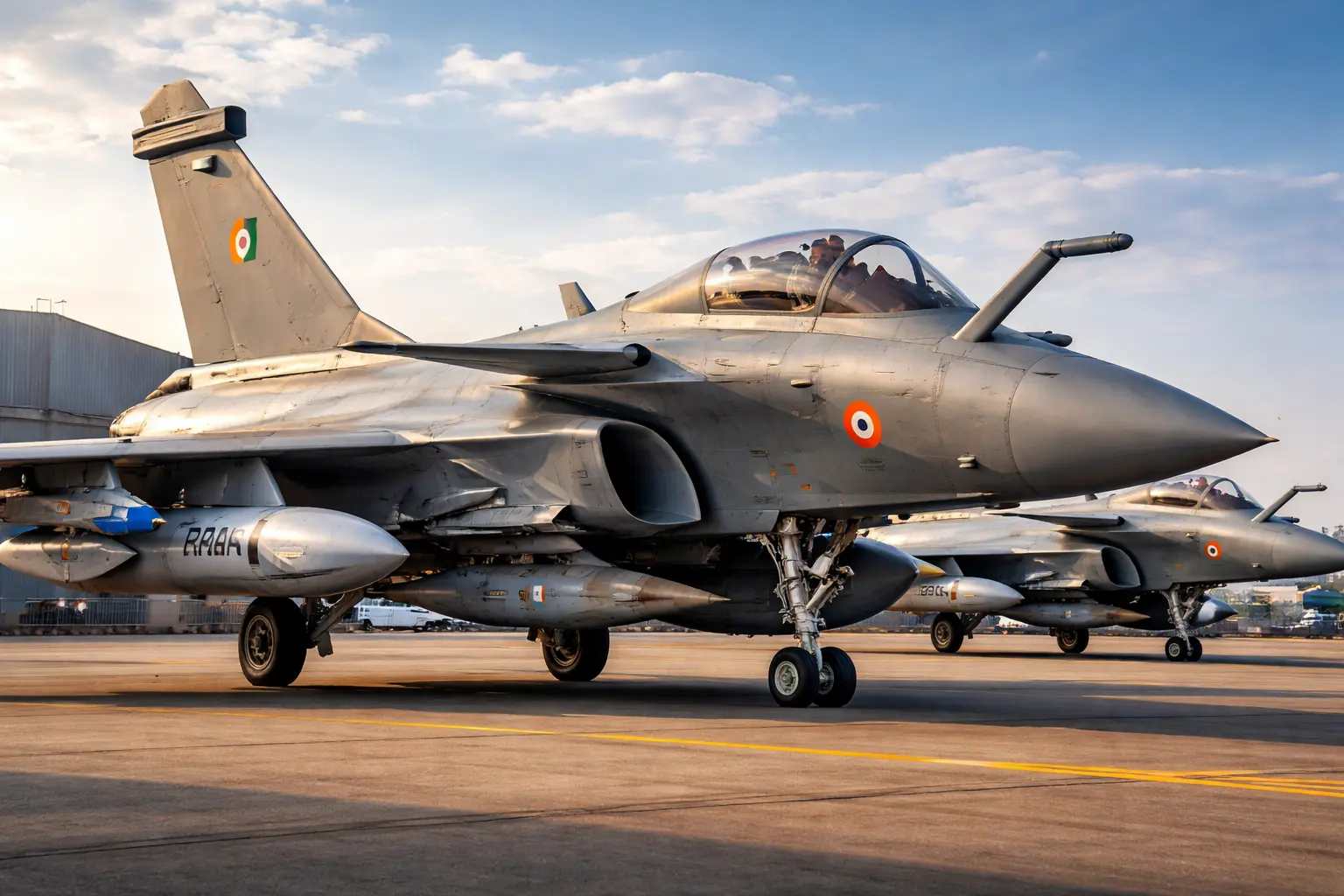
India has taken a firm stance on its ongoing Rafale fighter jet procurement, making several non-negotiable demands to ensure long-term operational autonomy and technological sovereignty.
Sources close to the defence establishment say that the government is drawing clear red lines to secure India’s strategic interests, including full access to source codes, indigenous weapons integration, and robust inter-operability across existing aircraft fleets.
The developments have emerged over the past week and are increasingly discussed on social media and defence analysis platforms. According to insiders, the Indian Air Force (IAF) has insisted that the Rafale jets, being procured under the latest contract, must allow complete software access.
This move aims to enable India to customize, upgrade, and integrate new systems without being dependent on the original equipment manufacturer (OEM) or foreign suppliers.
Full Source Code Access: A Deal-Breaker
The demand for full source code access marks a significant shift from previous procurement practices. Instead of restricted or kernel-level access, India is asking for complete combat control software access.
Defence analysts explain that this step will allow the IAF to integrate its indigenous missile systems, electronic warfare suites, and future upgrades seamlessly into the Rafale platform. Officials indicate that denial of source code could become a deal-breaker, potentially stalling the procurement if not addressed.
Indigenous Weapons Integration: Reducing Foreign Dependence
In line with India’s broader self-reliance push, the government has emphasized that Rafale jets should support integration of domestically developed missiles, including Astra and Rudram systems.
The aim is to reduce dependence on foreign arms and maintain operational flexibility during potential regional contingencies. Defence sources say this approach aligns with the country’s long-term vision of enhancing local defense manufacturing under the Make in India initiative.
Interoperability Across Aircraft Fleets
Another high-priority requirement is inter-operability. The new Rafales must be capable of seamless communication not only with existing Rafale jets but also with other aircraft in the IAF fleet, including Russian-origin fighters.
Officials argue that this is critical for joint operations and coordinated air strategies during complex missions. The inter-operability mandate ensures that the IAF can execute network-centric warfare efficiently, without platform-specific limitations.
Local Content and Maintenance Infrastructure
India has also reinforced its localization requirements. Around 60% of the components, systems, and spare parts for the new jets must be sourced domestically. In addition, maintenance, repair, and overhaul (MRO) infrastructure will be expanded within India to support long-term sustainment. The government stresses that this move is essential not only for operational readiness but also for boosting indigenous industrial capabilities.
U.S. Engagement and F35 Offer
While France remains the primary partner for the Rafale deal, U.S. involvement has surfaced unexpectedly. Reports indicate that America has signaled readiness to provide “unconditional support” for integrating F35 jets into the IAF.
This offer is positioned as a strategic counterbalance to China’s expanding J25 and J35 fighter fleet. Analysts caution that while the F35 offer appears supportive, India is unlikely to make immediate procurement decisions, keeping its focus on optimizing Rafale capabilities and self-reliance.
Strategic Implications
These developments highlight India’s increasingly assertive defense procurement posture. By insisting on full source code access, indigenous weapons integration, and inter-operability, India is positioning itself for long-term operational independence. Defence experts note that this approach could serve as a model for future acquisitions, emphasizing sovereignty over convenience.
Looking Ahead
India’s red lines on the Rafale deal signal a broader shift toward strategic autonomy. While negotiations continue behind closed doors, the public discussion reflects growing awareness of the importance of technology transfer, domestic manufacturing, and operational flexibility.
Observers expect that these demands will have ripple effects on India’s future fighter aircraft programs, including Tejas Mark 2 and AMCA, which are expected to evolve in parallel with these procurement guidelines.
Conclusion
The Rafale deal negotiations exemplify India’s new approach to defense acquisitions: assertive, technologically conscious, and aligned with the country’s vision for self-reliant military capabilities.
With non-negotiable terms firmly established, the IAF is poised to operate a more sovereign, capable, and interoperable fighter fleet, marking a significant evolution in India’s air power strategy.